
How to Check for a Warrant in St. Paul
St. Paul cases land in Ramsey County District Court. So the warrant check starts with the county search, not a city counter. The city still matters at the front end, though. A St. Paul officer writes the citation, and St. Paul police serve state warrants within the city limits.
- Run the name through the Ramsey County Sheriff's Online Warrant Search.
- Call the St. Paul Police nonemergency number only for police records, not for warrant status.
- Check the case in MCRO or at a courthouse terminal for hearings and orders.
- Call the criminal and traffic court at 651-266-1999 for case dates and terms.
- Call the Warrant Office at 651-266-9320 to confirm an active St. Paul warrant.
367 Grove Street and 425 Grove Street: Two St. Paul Counters
Two St. Paul addresses share the Grove Street name and do completely different jobs. The Police Department sits at 367 Grove St. The Law Enforcement Center and the Adult Detention Center sit at 425 Grove St. Drive to the wrong one and you lose the trip.
| Address | What It Handles | Best Used For |
|---|---|---|
| 367 Grove St. | St. Paul Police Department and its records unit | Police reports and city records |
| 425 Grove St. | Sheriff's Warrant Office, jail intake, bail window | Warrant status, surrender, bond |
| 15 W. Kellogg Blvd. | Ramsey County District Court and records | Case files, hearings, certified copies |
Warrant status is the second address's business, the case file the third's. A St. Paul police report only documents an incident, and it says nothing about a warrant.
The St. Paul Police Department and Municipal Court
St. Paul has no working municipal court today. Minnesota folded city ordinance, traffic, and misdemeanor cases into the unified district court. So St. Paul cases are heard at the main courthouse on Kellogg Boulevard, not at a city bench. The St. Paul Police Department still writes citations, investigates crimes, and serves warrants. Its records unit holds the local police records.
The city's own criminal division points warrant questions to Ramsey County District Court. Surrender questions go to the Adult Detention Center. St. Paul's police page lists the department address and the nonemergency number.
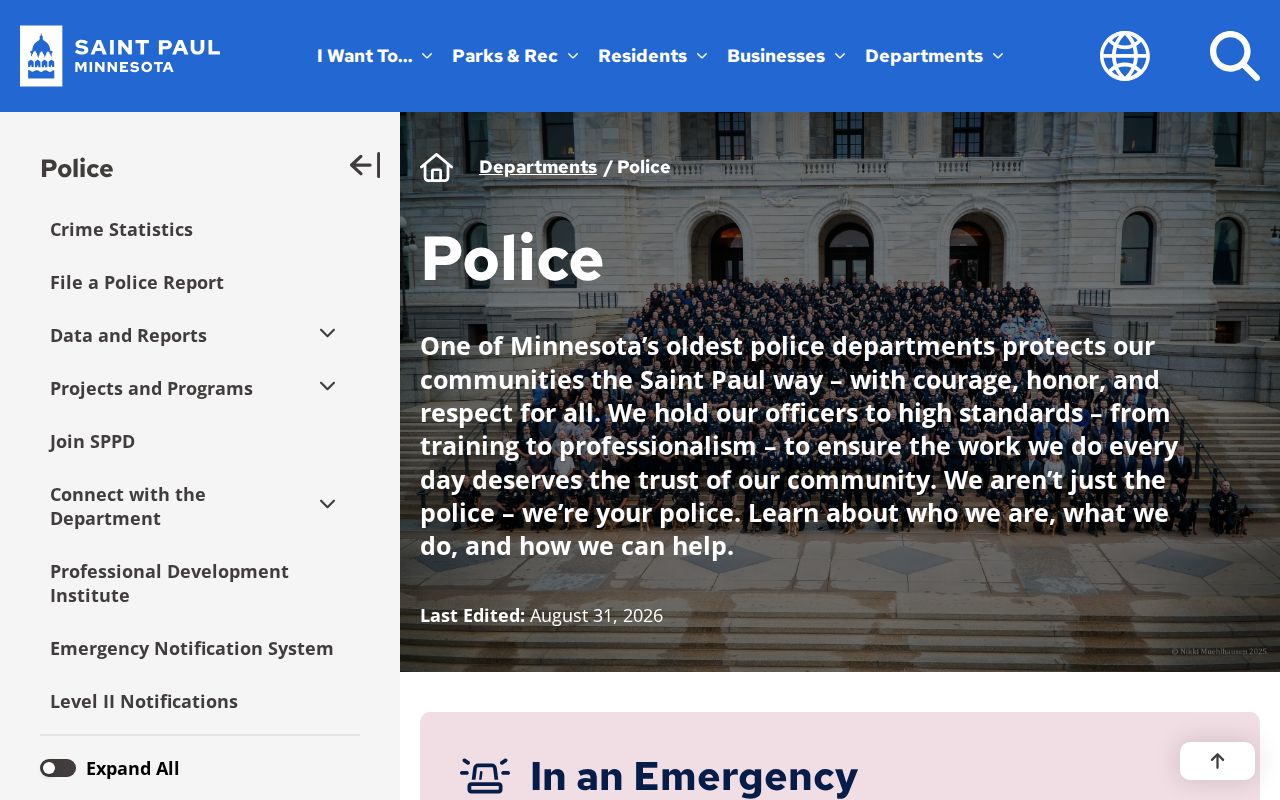
St. Paul officers serve warrants and document incidents. Setting a warrant's terms is not their job.
How St. Paul Police Validate a State Warrant
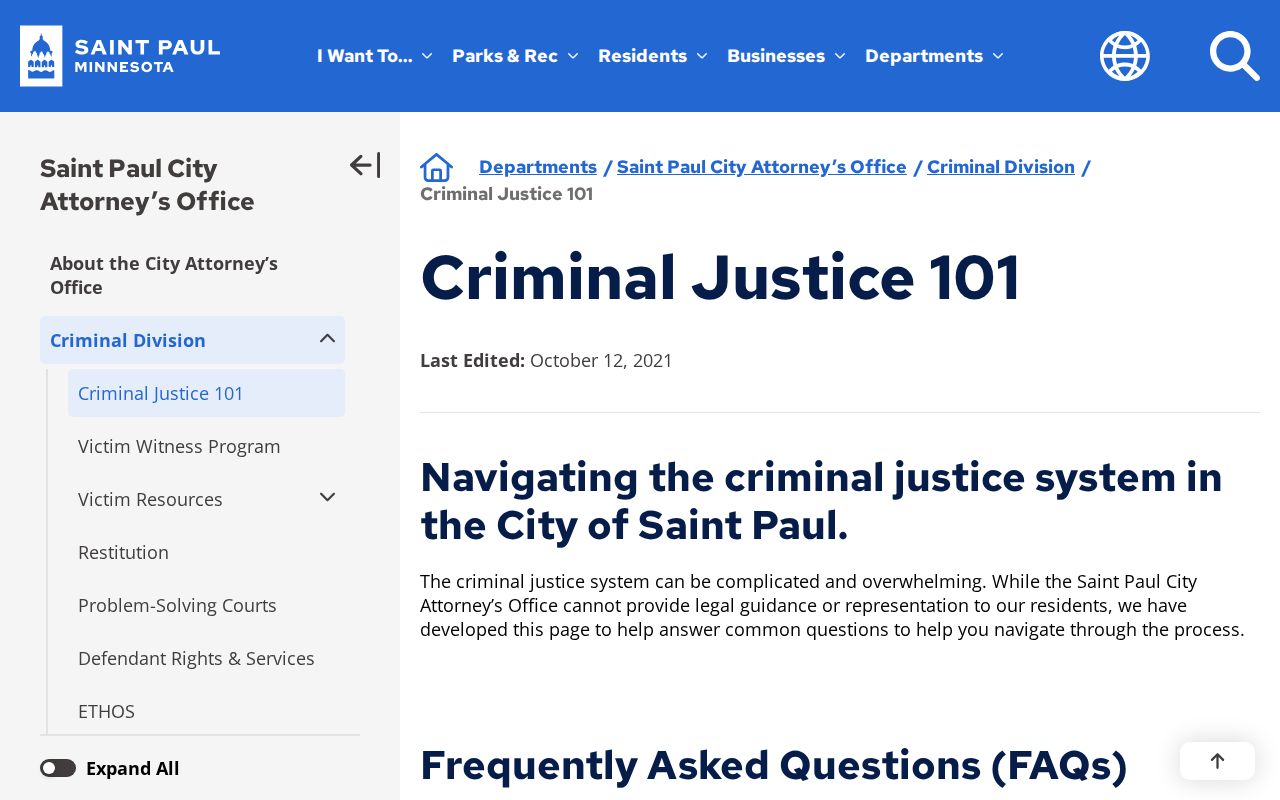
St. Paul's criminal division page repeats that split from the city's side. The court handles the case; the jail handles the surrender.
St. Paul's published police procedures build in a validation step before any field action. Dispatch queries the name first. The Sheriff's Warrant Unit confirms the warrant exists and is active, and only then do officers proceed. Felony warrants may be served at any hour. Misdemeanor service generally follows daytime restrictions unless an exception applies. That sequence is why a call about a warrant reaches the sheriff rather than the city desk.
Types of St. Paul Warrants
Every warrant tied to a St. Paul address comes from one trial court. The cases just arrive there by different roads.
| Warrant Type | How It Arises | Who Issues It |
|---|---|---|
| Traffic warrant | A St. Paul citation goes unpaid or a traffic date is missed | A district court judge |
| Ordinance warrant | An unresolved city code violation becomes a court case | A district court judge |
| Bench warrant | A missed court setting or a violated condition | The judge on the case |
| Arrest warrant | A charge filed after a St. Paul police investigation | A district court judge |
The label matters less than the case number, because the St. Paul district court controls all four.
St. Paul Fines and the Warrant Case
St. Paul publishes a fines page. Its first useful sentence is a routing instruction: parking, traffic, criminal, ordinance, boating, and fishing or DNR fines all go to Ramsey County District Court. Call the city about a fine? It points you to the court. Pay the city instead, and the money may never reach the case. The city issues the ticket. The court owns the file. That routing also explains the payment warnings, since a payment can be treated as a plea. A St. Paul driver who wants to contest a citation should call the court before sending money.
What a St. Paul Warrant Record Shows
The court file behind a St. Paul warrant looks like any other Ramsey County case file. The city appears in the charge. It also names the arresting agency. No separate city court exists.
| Case number | The district court identifier used to pull the register of actions. |
|---|---|
| Name on the file | The person named in the charging document. |
| Charge | The ordinance or statutory offense and its level. |
| Issuing court | Ramsey County District Court, Second Judicial District. |
| Release terms | Bail, supervision, or custody conditions set by the judge. |
| Status | Active, served, recalled, or resolved as reported by the custodian. |
The citation number on a St. Paul ticket is not the case number the court assigns. Keep both if you have them.
St. Paul Warrant Records: What the Unit Answers
For a police report, body-camera footage, or a local incident record, the St. Paul Police Records Unit is the right desk. A warrant question is not. The unit keeps limited weekday hours. It requires official identification for a subject-of-data request and lists copy fees for the records it produces.
Ask the St. Paul records unit for the document. Ask the court for the warrant status, because the two requests do not substitute for each other.
Where St. Paul Warrants Fit With Ramsey County
A St. Paul warrant is a Ramsey County warrant with a city origin. The district court issues it. The sheriff processes it. City police serve it inside the city limits. Federal matters sit outside that chain, and a warrant from another Minnesota county never appears in the Ramsey search.
Warrant flow: St. Paul Police or city ordinance case › Ramsey County District Court › Sheriff's Warrant Office › Adult Detention Center on arrest
For St. Paul matters, the Ramsey County warrant records home page carries the countywide search steps. The county warrant search page covers the sheriff's list in detail.
Traffic Warrants and Bail at the Law Enforcement Center
St. Paul police policy says many traffic warrants come with bail instructions and can be handled at the Ramsey County Law Enforcement Center. Treat that as a pointer, not a promise. The warrant itself controls. Its instructions may not match a general policy paragraph. Before going anywhere, call the criminal and traffic court at 651-266-1999 and ask what the case actually requires. If posting bail or bond is the answer, the Adult Detention Center lobby at 425 Grove St. never closes and accepts exact cash only. Confirm the terms first. A warrant can get recalled before anyone arrives, and a trip across St. Paul for the wrong instructions wastes hours that a phone call would have saved.
Public Access to St. Paul Warrant Records
St. Paul police records and Ramsey County court records sit in separate offices under separate rules. Ask the city for a police report and you will not see the court file. Ask the court for its records and no police report comes back.
Key Rules: City-held police data is requested under the Minnesota Government Data Practices Act. Court files follow the Minnesota Rules of Public Access, and Minn. Stat. 260B.171 keeps most juvenile records private.
Neither route produces a warrant list, and neither can clear a case.
Warrant Resolution Day: A 2014 St. Paul Milestone
St. Paul and Ramsey County built something notable in 2014: the first Warrant Resolution Day, documented in an official city budget paper. People with outstanding warrants could resolve them in one sitting, with the court and the county sharing a room. It proved the system can be organized around resolution instead of arrest. That chapter is closed now. No recurring event page exists, so waiting for an amnesty day is a bad plan. The standing route still works. Call the court, learn the terms, and use the Adult Detention Center turn-in process if the case calls for it. A St. Paul warrant always resolves through the issuing court, so follow the current process.
Note: Check the current process with the issuing court rather than relying on an old event listing from 2014.